

You can tell a lot about a person by the way they are remembered. Fifteen years after his twin brother, Michael McCue, was murdered, Mitch McCue remembers every day they shared.
Known to friends and family as the McCue Twins, they not only mirrored each other physically, but they also shared the same friends, played the same sports, and pursued careers as first responders.
“We trusted each other with our lives – literally,” Mitch wrote in his self-published book “Half Still Standing: Surviving the Murder of My Twin,” which chronicles his grief in the years since Michael’s death. “When alarms went off, I never wondered if he had my back. I knew.”
Michael McCue was murdered in February 2011 in the driveway of his Jacksonville Beach home. Mitch said his brother’s death shook the community because the brazen attack occurred on a quiet, residential street and claimed the life of someone so familiar.
His book is a deeply personal account of the trauma that follows when one twin is suddenly left to face the world without the other.
“When you’re a twin, you don’t grow up learning how to be alone. You grow up learning how to be together,” Mitch said. In the book, he writes that managing his grief was not about moving on. It was about learning to stay.
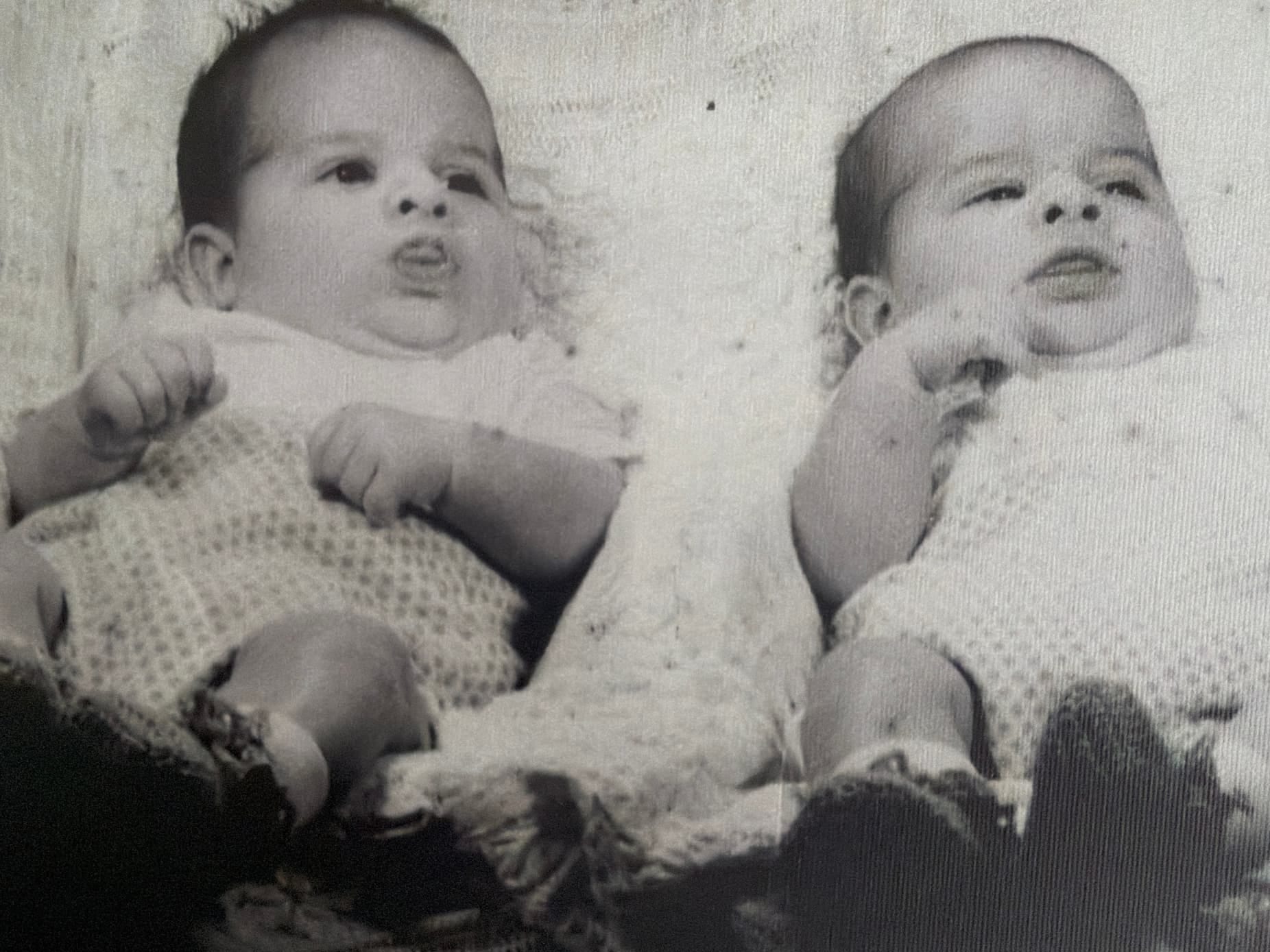
McCue said he struggled to process his pain in the wake of his brother’s murder. Writing forced him to confront feelings he had suppressed and reconcile emotions he had not known how to name.
“It definitely brought back the rawness of it. But honestly, it was kind of a relief to write it because it allowed me to let go of a lot I was holding on to,” he said. “It was probably some of the best counseling I could ever give to myself. It was therapeutic."
In addition to working as firefighters, the brothers were military combat contractors who trained soldiers how to detect improvised explosive devices and land mines. Michael was scheduled to leave for Afghanistan the weekend he died. He returned late from out of state, went home to rest, and was killed 12 hours later. Mitch said more than 2,800 people attended his funeral, which was televised to troops in Iraq and Afghanistan.
“To put it in perspective, Dale Earnhardt had 2,000 people at his service, and Michael had over 2,800. That’s a big deal,” said McCue. “That’s the thing with twins. He had his friends and I had my friends, so your network grows exponentially as the two of you.”
Sitting with pain connected to such profound trauma is difficult for survivors. But for Mitch, losing the person who had been his co-captain for a lifetime, finishing his sentences and anticipating his every move, felt insurmountable.
“When you lose a twin, it’s worse than a divorce or losing a mother or father. It’s a piece of you,” said McCue.
Writing the book helped him navigate the trajectory of his own loss. He said it also connected him with hundreds of surviving twins experiencing similarly profound grief.
“I didn’t want to deliver the story of what happened, per se, as much as I wanted to deliver how to get through it. That was the big part, kind of going through the phases of that and trying to understand how to navigate through that,” McCue said.
"I heard from a young lady who lost her sister, and she was having a really hard time with it. I said, 'You are actually right where you are supposed to be. It's a normal thing to feel guilt and like you didn't do enough'."
It had been difficult to quantify the pain he carried for 15 years. Writing lifted some of the weight, and hearing from other survivors continues to chip away at grief that will never fully disappear.
“Unbeknownst to me, the caregiver who helps me with my mother is an identical twin. Her sister had passed away, so I read her part of the book, and she was like 'Oh my God.' At that point, I knew I needed to share [my story] with people. It was one of the moments that was so profound. I just sat down, and I didn’t stop until I finished the book."
The writing process also gave Mitch space to reminisce about his favorite “twin stories,” from tricking teachers in high school “He was better in English than I was, and I was better at math, so we took each other’s exams," - to creating confusion at work.
“We were on the same truck one day, and we went to this call, and this lady was having chest pains. I was a paramedic, and Mike was an EMT,” recalled McCue. “Mike is taking her blood pressure, and I’m talking to her, and she said, ‘I think I’m seeing double’. We said, 'It's okay. We're twins.’”
It wasn't always fun and games. McCue remembers walking into a local watering hole and getting clocked with a piece of fruit meant for his brother.
“Walking into Ragtime one evening, I think Mike had stood some girl up, I don’t even know, and all of a sudden, I see this lemon come flying from across the room,” he laughed. “The girl comes over and starts giving me the what for, and I said, ‘I am Mitch, not Mike’. Then Mike came walking in, and I said, ‘Here you go. You can handle that. That lemon is not mine.’”
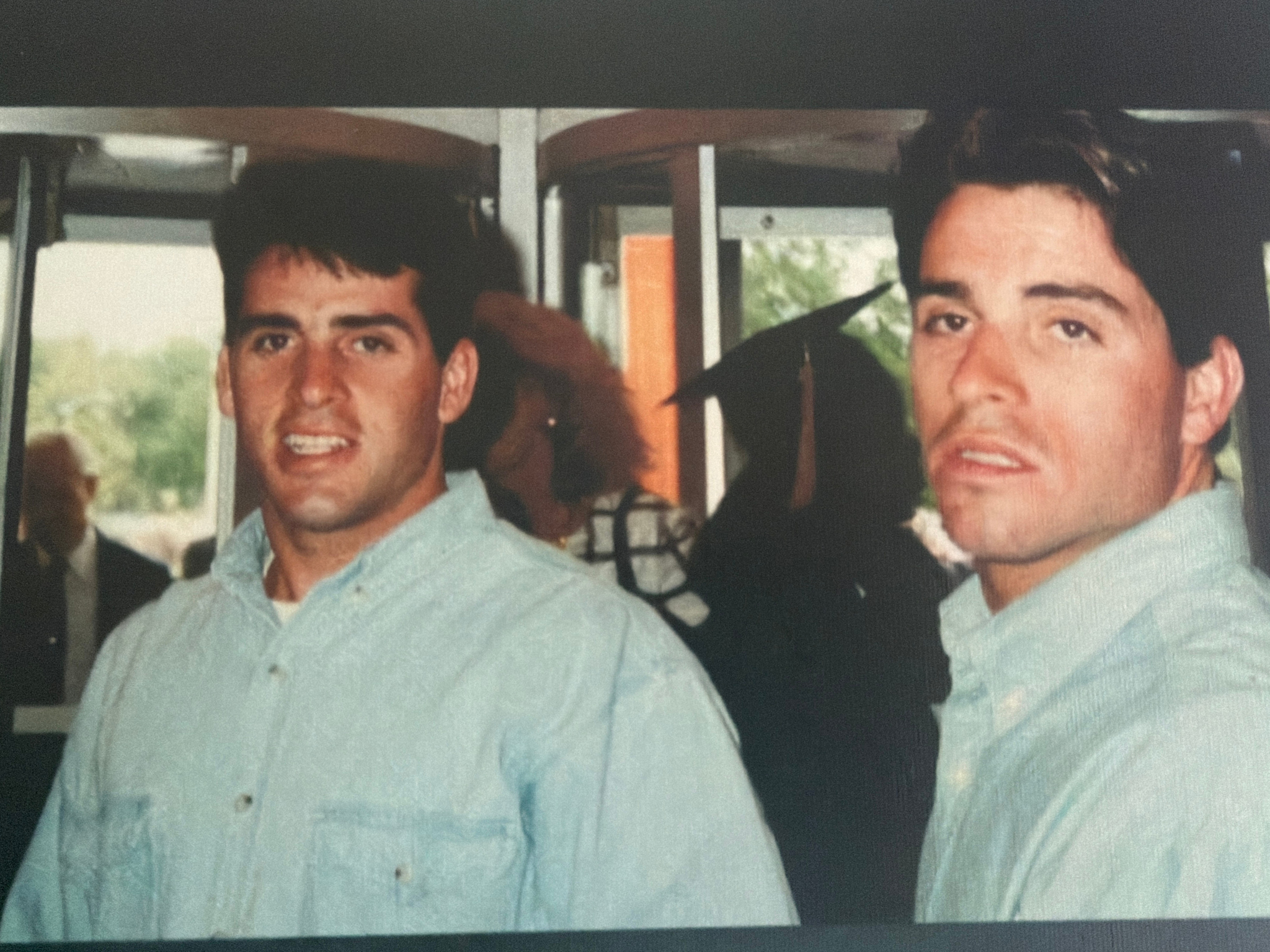
In the months and years after his brother's death, McCue divided his life into two distinct periods: before and after. He said the distinction became a survival mechanism, separating his memories and creating room for grief without allowing it to swallow him whole.
Sharing his story in his own words has given him space to reshape his own identity and his relationship with Michael.
“I’ve taken the really negative thing that is his murder to positively affect other people,” said McCue,
“Everybody wants to see me to see Mike. I never really thought of that early on. When they saw me, some it upset, and for some it gave solace. I knew they were grieving, and the community really embraced our family.”
McCue is grateful for the love he carries for his brother. It is a way to honor his twin’s memory and a bond that will never be broken.
“I miss him every day. I see him every morning when I’m brushing my teeth. I wonder where he would be. The what-if question will never be answered. It’s a process I have to get through every day. I talk to him every day and try to navigate life without him,” he said.
“Some days are easier than others, and some days are not. The purpose of the book is to help people navigate their situation and keep their memory alive. We're all in a crappy club. It will never go away, but if this helps even one person, then I’m paid in full.”
“Half Still Standing: Surviving the Murder of My Twin" is available on Amazon.


