

As soon as a hurricane passes, Jacksonville Beach Fire Marshal Steve Sciotto starts fielding the same question: Can I go home now?
The answer is almost never yes, not right away. Before residents can return to the beach communities, engineers have to check every bridge to make sure it's safe for vehicle traffic. Crews have to clear roads of downed power lines and debris. Flooding, water and sewage leaks have to be contained and secured. First responders need to be in place before anyone comes back.
“Individuals think that as soon as the storm passes, they can return to the beach communities,” Sciotto said. “But before anyone can return, the bridges must be checked by engineers to ensure they're safe for vehicle use.”
It's the misconception Sciotto, a 35-year veteran of the Jacksonville Beach Fire Department, says he wishes more people understood. He began his career there on May 1, 1983, and has served as fire marshal since 2008. His office oversees emergency management and protective services for the city, including the radio communication system, fire and life safety investigations and inspections, fire code enforcement, building plan reviews, special event permit reviews, and fire prevention and life safety education for the community.
With hurricane season underway, Beach Gazette asked Sciotto what residents get wrong every year, where the department is watching most closely, and what's changed since last season.
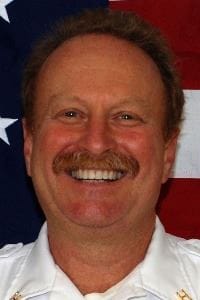
1. When you hear the forecast for a quiet season, what does that mean to you in terms of preparation?
A quiet season doesn't change the city's hurricane season preparation activities, but it worries me because I'm concerned a large portion of residents will become lackadaisical about their own preparations.
2. What's the one thing people tend to get wrong every single year, no matter how many times you say it?
We tell the public to start preparation activities in May and June, including putting together an evacuation plan and gathering supplies, but a large percentage waits until storm forecasts are being broadcast.
3. What does your department consider the biggest hurricane season readiness gap for the beach communities specifically?
The biggest gap is residents not taking evacuation orders seriously, and waiting for a storm to arrive before making evacuation and preparation plans.
4. Are there specific streets, intersections or neighborhoods your department is watching closely?
The major areas of concern are the neighborhoods east of Third Street and along the Intracoastal Waterway, which may be greatly affected by tidal surge and wave action.
5. What's the hardest call you've had to make in this job?
The hardest calls have been not sending EMS personnel to help individuals during past hurricanes, and making them wait until it is safe for our staff to respond to the incident. When winds hit 55 mph sustained, all city personnel shelter in place. Thank goodness no one has lost their life in our city during a shelter-in-place period.
6. Has any city infrastructure work (drainage, seawalls, pump stations) changed the risk picture since last hurricane season?
Currently, a lot of stormwater infrastructure work is being performed throughout the city. If we are threatened by a tropical event, the stormwater system will be cleared and additional pumps will be put in place to aid in the removal of stormwater.
7. How does coordination work between Jacksonville Beach, Neptune Beach and Atlantic Beach's own police and fire departments and Duval County Emergency Management during an active storm?
When a tropical event threatens the area, the cities of Jacksonville, Jacksonville Beach, Neptune Beach and Atlantic Beach operate what is known as the Beaches Emergency Operations Center, where representatives from all the agencies coordinate activities and responses, allowing for the most efficient and effective response.
8. Are there specific resources or check-in systems for elderly residents, people with disabilities, or those without reliable transportation?
JaxReady is a great website to know about for these resources. It includes a special needs registration form that all individuals with medical issues need to complete. Filling out this form allows them to arrange for evacuation help and ensures a spot at a shelter staffed with licensed medical personnel.
9. What's the biggest misconception residents have about post-storm safety that you wish more people understood?
See Sciotto's full answer at the top of this story.


