

Jacksonville Beach police are urging parents to learn the rules for electric bicycles before letting their children ride to school this year, part of a broader education and enforcement campaign launched as classes resume across the Beaches.
All three Beaches cities regulate e-bike speeds on sidewalks and shared paths. Whether a two-wheeler counts as a bicycle or a motorcycle under the law depends on its speed, its power and whether it has working pedals.
"Not every electric-powered, two-wheel vehicle is legally considered an e-bike," said Traffic Sgt. Brian Wallace. "If a vehicle can travel faster than 28 miles per hour, produces more than 750 watts of power or lacks functional pedals, it is classified as an electric motorcycle."
Unlike e-bikes, electric motorcycles must be registered and operated by a licensed rider with a motorcycle endorsement.
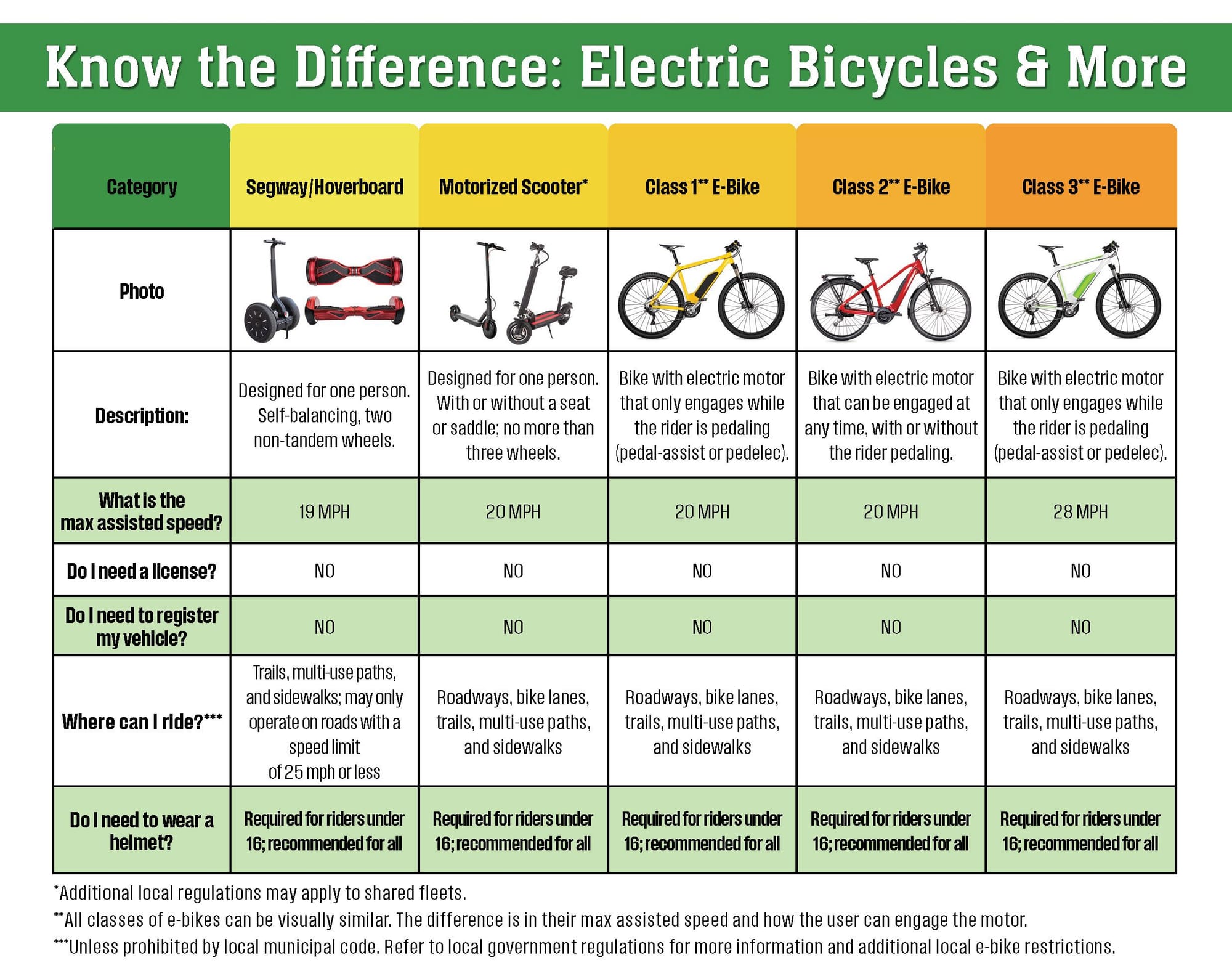
Florida law recognizes three classes of e-bikes: Class 1, which provides pedal assistance up to 20 mph; Class 2, which includes throttle and pedal assist up to 20 mph; and Class 3, which provides pedal assistance up to 28 mph.
Wallace said parents should also understand their legal exposure. Under Florida Statute 322.35, a parent or guardian may not knowingly allow a child under 18 to drive a motor vehicle on a public roadway without proper authorization. Jacksonville Beach police say riders stopped for a first-time violation will typically receive a documented warning, but repeat violations or more serious offenses can bring stiffer penalties, including criminal citations, towing and storage fees.
"If you're not sure whether your vehicle is an e-bike or an electric motorcycle, contact the Jacksonville Beach Police Department before you ride," said Jacksonville Beach Patrol Cpl. Dustin Kling. "We encourage every parent and rider to know the law, ride responsibly and always wear a helmet."
Neighboring cities
Atlantic Beach and Neptune Beach have also adopted regulations aimed at balancing e-bike access with pedestrian safety.
Atlantic Beach limits bicycles and e-bikes to 10 mph on sidewalks and shared-use paths, and restricts city parks, trails and unpaved rights of way to human power only. City officials said enforcement emphasizes pedestrian safety while educating riders about the rules.
"Our goal is to foster a culture of respect on our paths," said City Manager Kevin Hogencamp. "By combining clear rules with consistent enforcement and education, we ensure that Atlantic Beach remains a safe, walkable and bikeable community for everyone."
Neptune Beach caps e-bike speed at 15 mph citywide, on streets and sidewalks as well as the beach. Riders must obey stop signs and signals and yield to pedestrians. Ordinance 2025-06 extended that same 15 mph limit to beach sand, which had previously been off-limits to e-bikes. Violations carry a $15 fine for riders 14 and younger and a $62.50 fine for riders 15 and older.
Neptune Beach police also remind riders that lights are required after dark, the same as on a conventional bicycle: a white front light visible from 500 feet and a red rear light or reflector visible from 600 feet.
Statewide, an e-bike is treated as a bicycle. No license, registration or insurance is required. Riders and passengers under 16 must wear a properly fitted helmet. On a sidewalk, riders must yield to pedestrians and give an audible signal before passing. Lights are required after dark. Removing the pedals or unlocking the motor takes the machine out of the e-bike definition entirely.
Getting to school safely
The e-bike push is one piece of a wider back-to-school safety effort.
"As students head back to the classroom, whether they are walking, biking, riding the bus or getting dropped off, we all have a role in helping them arrive safely," Wallace said. "Jacksonville Beach is proud to be a walkable, connected community. Programs like our Walking School Bus and Safe Route to School Initiative help students get to school safely while encouraging healthy habits."
A Walking School Bus builds safety in numbers. Students pick a meeting place and walk to school as a group with at least one adult along.
The Safe Routes to School initiative, a partnership with the Florida Department of Transportation, encourages families to map the route to school ahead of time, cross only at marked crosswalks and follow pedestrian, bicycle and e-bike safety guidelines.
Whether on foot, bicycle or e-bike, students should keep their eyes up and devices down. Loud music and video games create distractions that can turn dangerous fast. Police also recommend light, bright or reflective clothing so drivers can see students, and warn against hoods that block a rider's view of traffic.
At the bus stop, students should keep their distance from the curb, stay clear of the wheels where a driver may not see them and never chase a bus that has pulled away.
"If your child rides the bus, remind them to arrive at the stop at least five minutes early and stay five giant steps away from the street or bus while you're walking," Wallace said. "When getting off the bus, always cross in front only and only when the driver says it's safe."
Drivers have a role, too, Wallace said.
"Slow down, follow posted speed limits, put distractions away and watch for students walking, biking or crossing the street," he said. "Give yourself a little extra time in the morning and afternoon commute. A few extra seconds could make a big difference in keeping our students safe."


