

The story of a community is written in its history. Local newspapers capture the texture of a place, embroidering the record with intricate details of the people who call it home and color the stories with threads woven across generations.
Together, the details let people see themselves up close while recognizing that they are part of a bigger picture. While the issues may change over time, the desire to know what is happening and why it matters remains the same.
Since the late 1800s, Beaches residents have looked to hometown newspapers for information about the actions and decisions that shape where they live. From early accounts of tourism and development to modern coverage of environmental sustainability and connectivity, local reporting helped keep residents engaged and informed.
For the price of a nickel, residents had access to railroad excursions, land sales and civic improvements. Occasionally, free publications were distributed at hotels and railroad stations as promotional material designed to attract visitors and prospective land buyers.
John Frank and W.R. Freeman published the weekly Pablo Beach Breeze in 1888 from a downtown newsroom on West Bay Street and an office at the Murray Hall Hotel, the first of the seaside fantasy hotels featuring three stories, a tower-like structure, billiard room, bowling alley, sulfur water spa, and its own plant to supply electricity to the hotel.
While records are scarce, a devastating fire on Aug. 8, 1890, was likely responsible for ending its run.
Col. A.E. Koehler began publishing the Pablo Beach News in 1918, which he followed with the Atlantic Beach Herald and the Mayport Times in April 1921.
When Pablo Beach changed its name to Jacksonville Beach in 1925, Koehler renamed the publication the Jacksonville Beach News. In his book “The Jacksonville Beach Story,” author Carleton Burr described Koehler as the town’s “most active and vociferous champion” and an “enthusiastic and effervescent scrivener.”
In 1931, Frank Brennan and Leslie Reese launched the short-lived publication The Boardwalk Gazette, but it folded after just 12 issues, noting that “no effort was made to solicit local advertising.”
Such publications as the Ocean Breeze in Pablo Beach were used to bolster the popularity of seaside resorts, promote hotels and keep residents informed of railroad excursions, land sales and civic improvements.
Historical accounts paint the quaint railroad community of Ruby Beach as a bustling seaside resort town where industry and growth intersected near the shoreline. They also describe a place of pristine coastal splendor, brimming with possibilities.
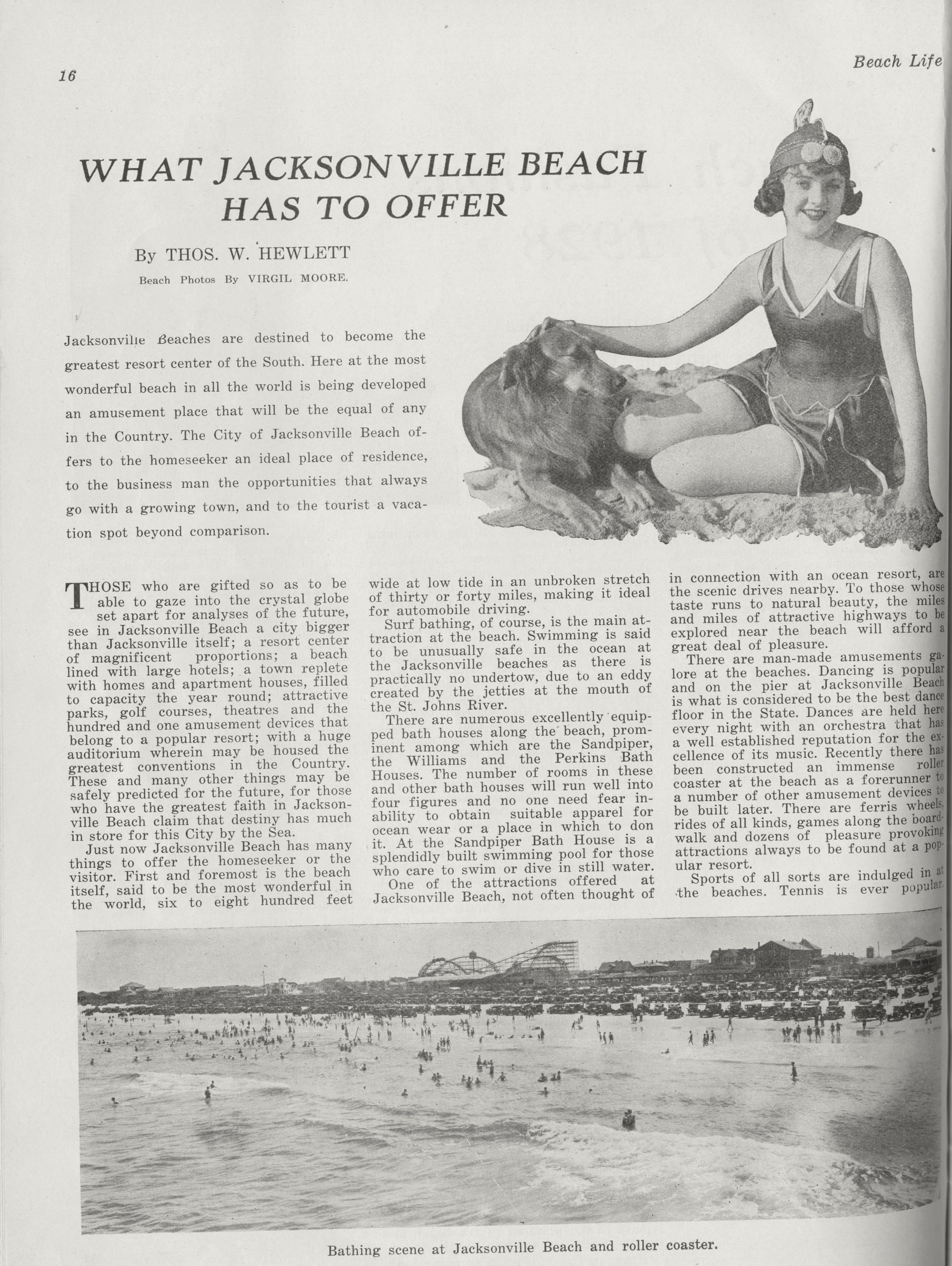
Headlined “Beauty and the Beach: Natural beauty is plentiful – Room for Improvement by Man,” Thos W. Hewlett wrote of “the broad expanse of rolling ocean, long wide stretches of sandy beach, sand dues and palms giving a semi-tropic background near the waterfront.”
Amidst the raw, natural beauty of “magnificent oaks festooned with Spanish moss” forming “cathedral like archways,” he warned of the price of progress and the cost that careless planning would have on the community if not protected.
Hewlett also pointed to the power of civic engagement to ensure a community’s needs are met. Beach Life staff called on its readers to mobilize and create a citizen-led committee to promote beautification efforts and protect the area’s coastal charm. The paper committed to providing coverage to spread the word and encouraged readers to get involved.
An editorial in the March 1928 issue urged citizens to embrace the “Beach Spirit” as the “enthusiasm for the potential greatness of the Beaches and the importance to themselves that will override all obstacles and make a resort center that will be second to none in the south.”
“Beach Spirit” would help drive the need for “beautification efforts, city planning, parks and playgrounds, cheaper and more efficient transportation service, changes in city government and adjustment of taxation, varied amusements, streets, schools, fire protection, police protection, “and all other modern facilities that belong to an up-to-date city,” according to the editorial.
“The first step and the most important step in order to obtain them all is to develop this Beach Spirit we write of. It will gather momentum of itself if properly sponsored and intelligently directed. The power of enthusiasm is unlimited. Faith and belief in the Beaches will put them way over the top. Every single need the Beach has can be provided if everyone interested in building them will join hand and mind and heart in the will to do.”
Local newspapers also served as a gathering place for social connection and ensured that residents learned who moved into town, who was coming home from university for the summer, and which local families were celebrating births, weddings, anniversaries and losses.
A photograph or a mention in a society column stitched the social fabric of the community with colorful details of a beach party hosting a Sunday seafood dinner, a weekly roster of guests at the Casa Marina, families spending a “fortnight at Atlantic Beach Inn” and a gathering of young men at a Chalmers Horne’s cottages for the summer creating “quite a gathering place for the young society set.”
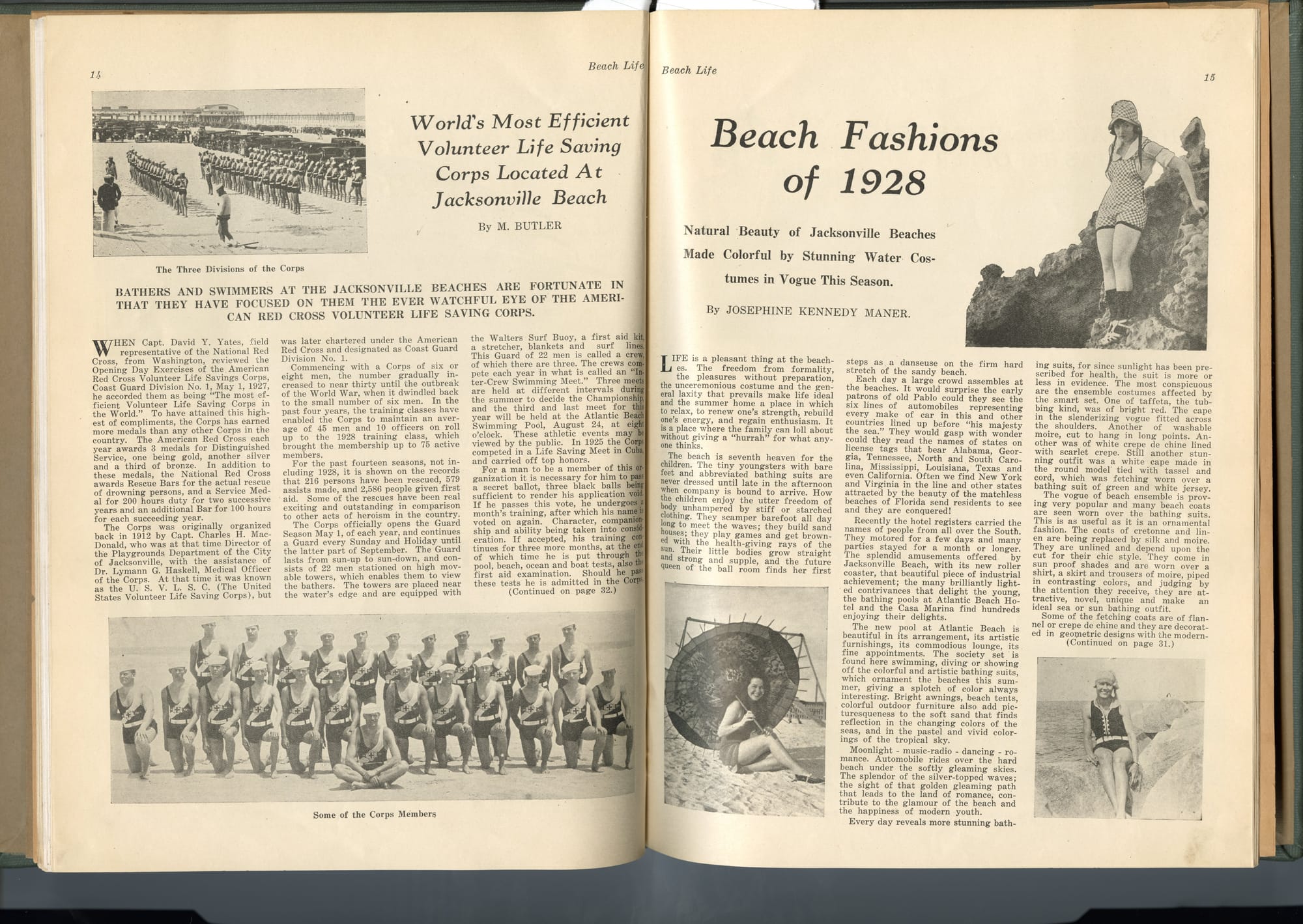
“Peaches on the Beaches” featured black and white photos of sunbathers donning their best “water costumes.” Josephine Kennedy Maner wrote of the society set “swimming, diving or showing off the colorful and artistic bathing suits which ornament the beaches” during the summer months.
She painted a picture of the surroundings as richly and with as much detail as she colored the fetching vogue beach ensembles of women dressed in beach coats of cretonne and linen, silk and moire, piped in sun proof shades of contrasting color.
“Bright awnings, beach tents, colorful outdoor furniture also add picturesqueness to the soft sand that finds reflection in the changing colors of the seas, and in the pastel and vivid colorings of the tropical sky,” Kennedy Maner mused.
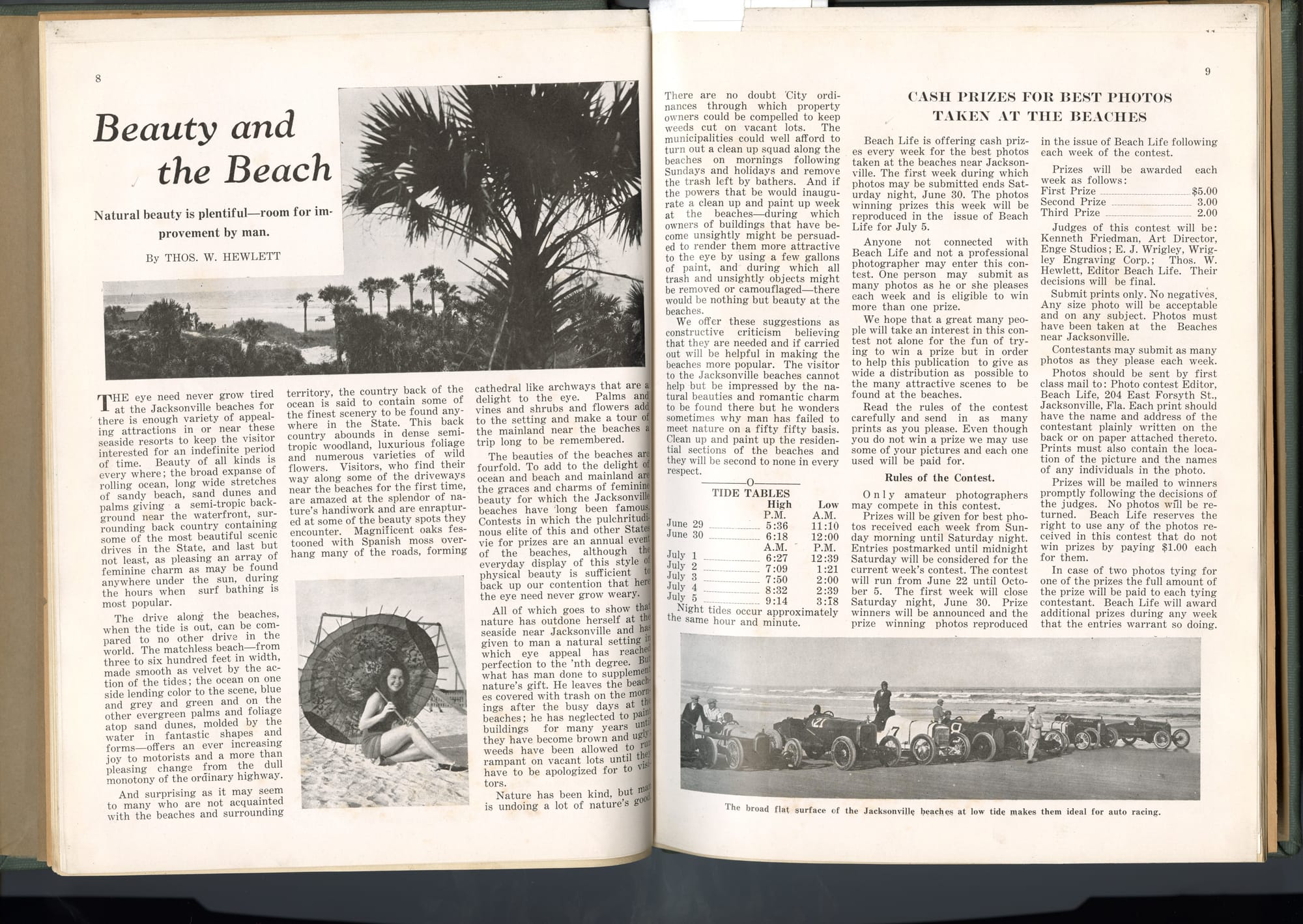
“Moonlight – music radio – dancing – romance. Automobile rides over the hard beach under the softly gleaming skies. The splendor of the silver-topped waves; the sight of that golden gleaming path that leads to the land of romance, contribute to the glamour of the beach and the happiness of modern youth.”
In 1935, publisher Ed Compton debuted The Ocean Beach Reporter, penning an editorial promising “to make the best-like weekly in the state.” While ownership changed hands over the years, Compton’s publication remained the Beaches most widely read newspaper until 1959.
Three other weeklies circulated around the same time. The Pablo Observer was published by Henry and Grace Isaacs from their office on Pablo Avenue. Jack Miles also had an office on Pablo Avenue where he produced the Beach Citizen. Neither publication had a long shelf-life.
Francis McCondichie logged a decade as the Beaches correspondent for the Florida Times-Union when she launched Beach News & Advertiser, which she operated until 1955.
When Bob and Ruby Scott founded The Beaches Leader in 1963, McCondichie would serve as the first associate editor. Bill and Beryl Dryden purchased the newspaper from the Scotts in 1971. Tom Wood became the third owner in 1983 and operated the twice-weekly publication until 2016, when he sold The Beaches Leader to longtime editor Kathleen Bailey. The Leader served as the cornerstone for local news for 63 years, documenting historical milestones from the 35-foot height amendment to the construction of a new pier. It chronicled the seasons from the New Year’s Polar Plunge and Springing the Blues Festival to the Opening of the Beaches Parade and Deck the Chairs holiday spectacular.
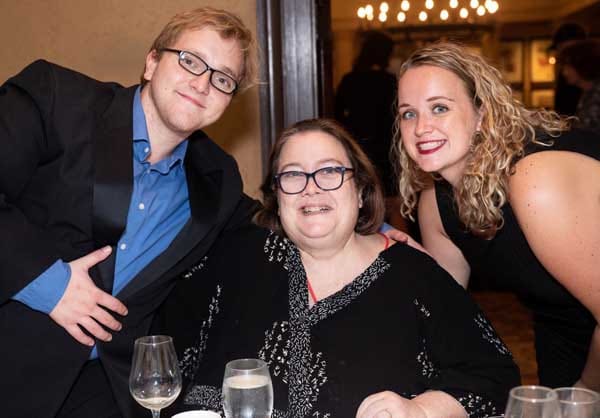
“If something matters to the Beach, it matters to The Leader,” Bailey noted in an editorial celebrating the publication’s Golden Anniversary in 2013.
Bailey died in March 2020. Her daughter Aline carried The Beaches Leader over six more years before closing its doors in April 2026.
The community lost more than a newspaper. It lost a trusted voice.
“The Beaches community has lost a true champion. [Bailey] believed with all her heart that a community had to have good information in order to act in its own best interests,” said Tom Wood, who hired her as editor in 1994. “It takes a strong ethical foundation to do good journalism in a company that one loves and calls home.”
Jacksonville Beach residents Georgette Dumont and Jennifer Ashley share the same instincts and partnered to establish Beach Gazette, a new non-profit publication to ensure residents have a voice because a newspaper is more than a collection of stories. It is the first draft of history.


